Valle delle Abbazie: How to explore Abruzzo one abbey at a time
Medieval churches, wineries, small villages and views for days. This is Abruzzo at its most charming. The Valle delle Abbazie route is the perfect way to explore the region’s cultural and culinary offerings, made with slow travel in mind.
Forget the tourist-packed streets and long queues. This is a different Italy trip, perfect for those looking for a more meaningful way to travel. Whether you have an afternoon or several days in Abruzzo, here’s how to explore the Valley of the Abbeys at your own pace.
Disclosure: I visited the Valle delle Abbazie as part of the Active Abruzzo press trip. However, all opinions are my own.
What is the Valle delle Abbazie?
The Valle delle Abbazie is a tourism initiative that connects historic abbeys, villages and countryside along the Vomano and Mavone rivers in the province of Teramo. Its setting stretches between the Adriatic coast and the Gran Sasso mountains.
There are five main abbey churches at its heart: San Clemente al Vomano, Santa Maria di Propezzano, Santa Maria di Ronzano, San Giovanni ad Insulam and San Salvatore in Canzano. Some retain parts of their monastery complexes. At others, the church is the main surviving reminder of monastic life.
The project was created to encourage year-round visits and bring together cultural sights, nature and local businesses. You can explore the route by car, by bicycle or on foot, with official maps and guides to help you choose your stops.
Why it’s worth exploring the Valle delle Abbazie
For me, the appeal is having history and countryside within the same trip. You can spend the morning looking at medieval carvings, stop for lunch, then walk around a village or arrange a wine tasting. There’s enough variety to interest someone who doesn’t want to spend all day visiting churches.
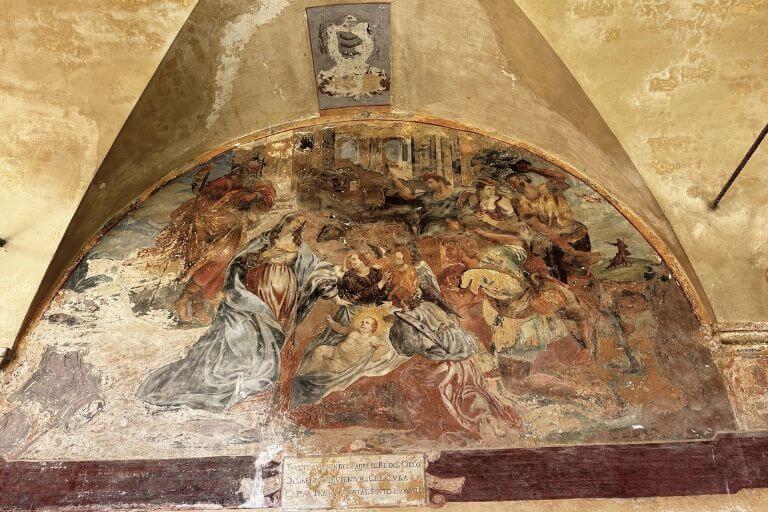
You don’t have to go on a spiritual quest to enjoy this experience. Many of the abbeys offer a glimpse of the past. Whether you’re looking at medieval frescoes, climbing triangular towers or walking on a glass floor over old ruins, you’re immersing yourself in centuries of Abruzzo’s history.
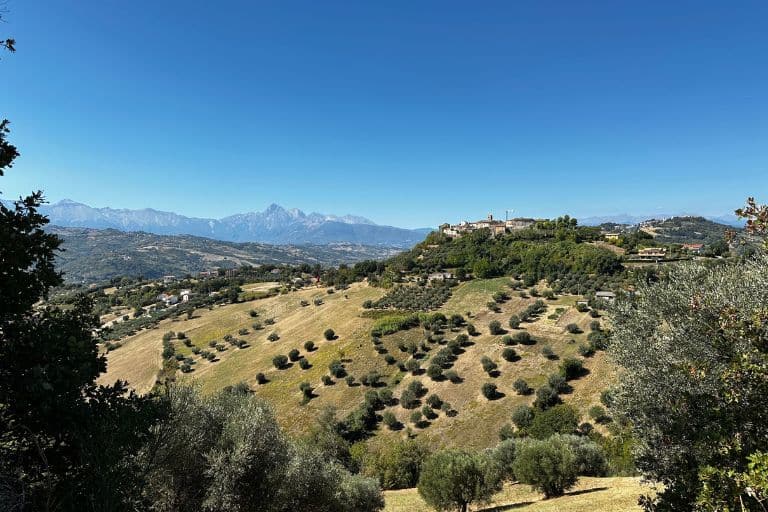
I think the best way to enjoy the Valle delle Abbazie is to keep your schedule flexible. Pick two abbeys and a village as a good starting point that you can explore by car, especially if you want time for a proper lunch. Book the visits first, then work the rest of your day around them.
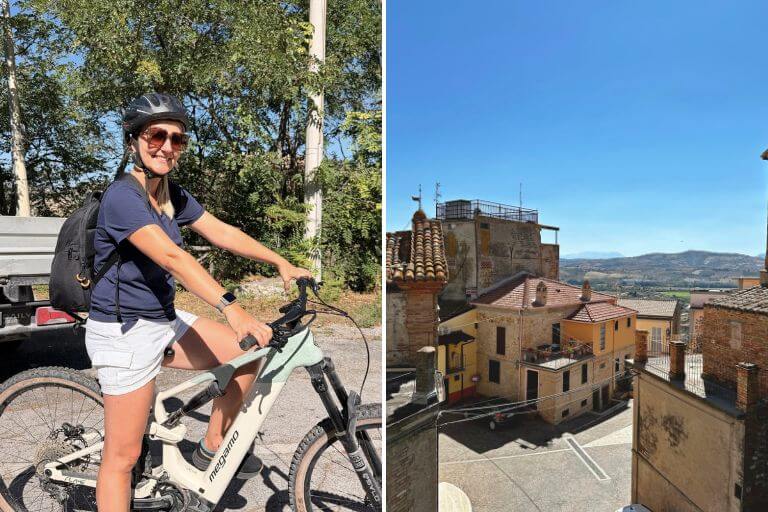
Many of the abbeys require a pre-booking. The caretakers are usually volunteers, so they might not be available all the time, especially at the last minute. In some instances, you can access the building without a guide. Check the contact information for the abbeys you want to visit for instructions.
Choose how to explore the valley
The official Valle delle Abbazie website offers walking, driving and cycling itineraries. These are different ways to explore the area, rather than three outings with fixed departure times. The cycling section links to three route parts, while the walking guide divides the longer cammino into five stages.
This is a perfect way to explore the province of Teramo, especially if you want to go at your own pace and be flexible with what you want to see. Alternatively, you can book a guide if you prefer not to go alone or don’t want to worry about the logistics.
Valley of the Abbeys walking route
The Valley of Abbeys cammino is a great way to explore the province of Teramo. It has five stages from Isola del Gran Sasso to Roseto degli Abruzzi on the coast. You can also start on the coast and walk in the opposite direction.
| Official walking stage | Approximate distance |
|---|---|
| Isola del Gran Sasso to Basciano | 17 km |
| Basciano to Cellino Attanasio | 22 km |
| Cellino Attanasio to Canzano | 20 km |
| Canzano to Morro d’Oro | 20 km |
| Morro d’Oro to Roseto degli Abruzzi | 14 km |
These distances total about 93 km. You’re looking at five walking days if you follow one stage per day. Allow longer for shorter days, sightseeing and rest. Walking times depend on your pace, climbs and conditions. In some areas, you’ll be on the road, so keep that in mind.
Read more: Official walking stages and distances
Day trip by car or bicycle
If you plan on driving, I suggest pairing San Clemente al Vomano with Santa Maria di Propezzano. There is a winery connected to the monastery that offers wine tastings and tours. Be sure to book in advance, as you might not be able to participate. For a second day, consider Santa Maria di Ronzano and San Giovanni ad Insulam towards the mountains.
For cycling, choose a route that suits your fitness and confidence on roads. Ask a local operator about hills, surfaces and bike hire before deciding how much ground to cover. An e-bike may help with climbs, but you still need a suitable route.
Four abbeys to put on your list
San Clemente al Vomano
San Clemente al Vomano stands in Guardia Vomano, near Notaresco. Its origins go back to the ninth century, and while it’s not the biggest church, it has some really interesting architecture, including old burial rooms you can see through the glass floor panels.
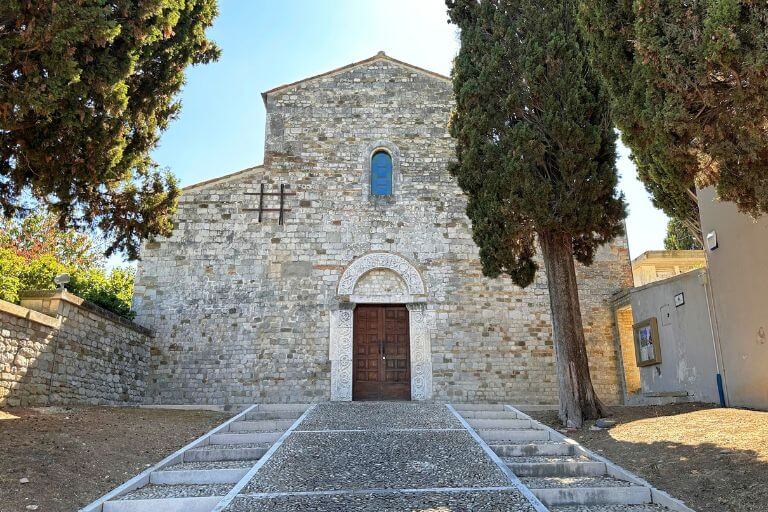
The main feature is the twelfth-century ciborium, an elaborate canopy over the altar. Look for carved plants, animals and human figures worked into its decoration. The names of its makers, Roberto and Ruggero, survive on the structure.
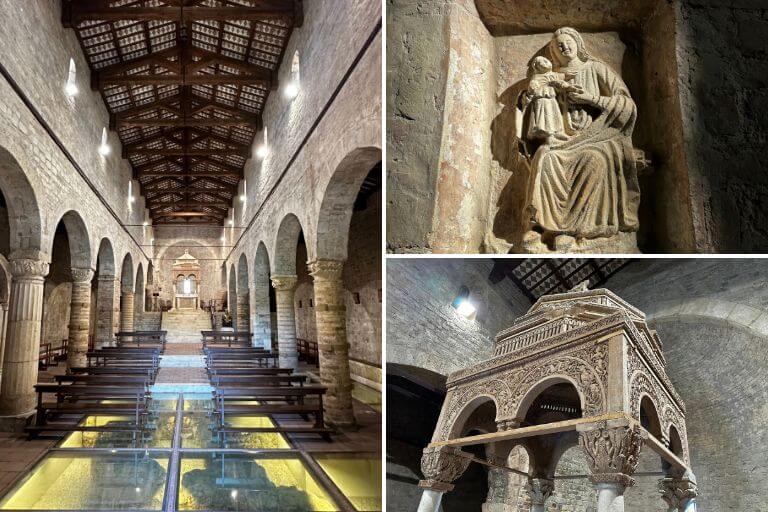
The capitals above the columns also have different designs. It’s a good place to slow down and look at the details rather than taking one photograph from the doorway.
Read more: San Clemente history and visits
Santa Maria di Propezzano
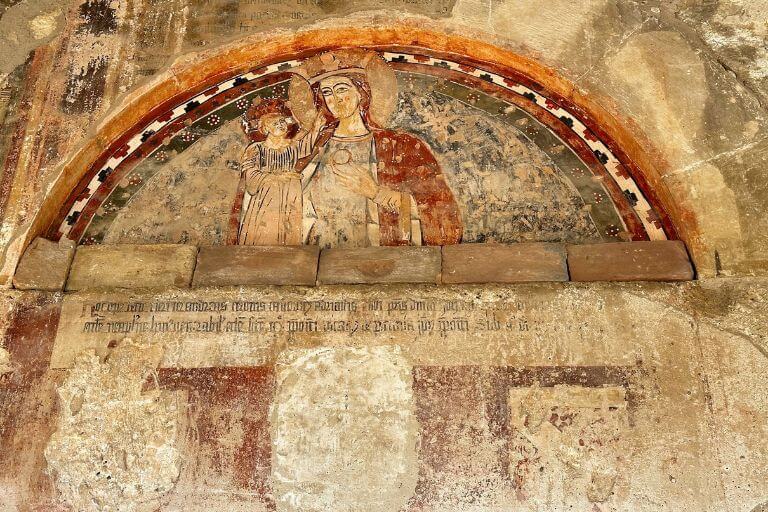
Santa Maria di Propezzano, near Morro d’Oro, combines a church, surviving monastery buildings and a cloister. Its carved Porta Santa, or Holy Door, is another detail that makes this stop unique. The doors are only opened twice a year and used to be in the centre.
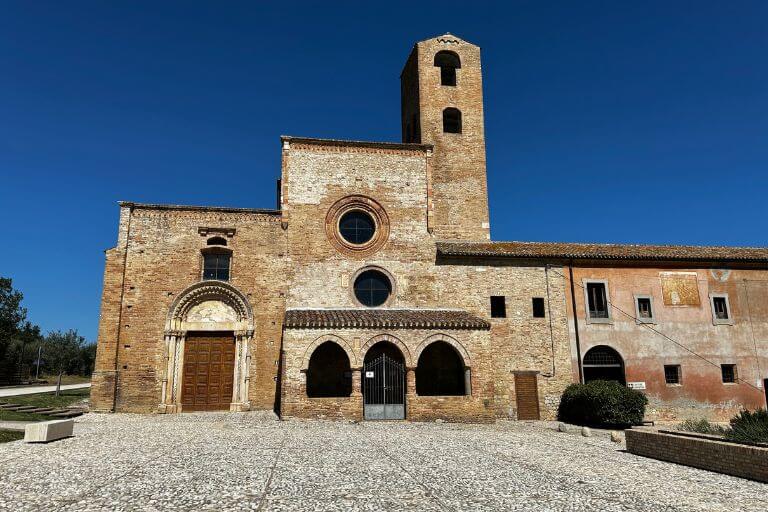
The abbey also has a founding legend. It says that three German archbishops returning from the Holy Land stopped beneath a dogwood tree and hung their bags on its branches. The tree grew, and the Virgin Mary appeared and asked them to build a church. This is a local religious story, rather than a confirmed account of the abbey’s beginnings.
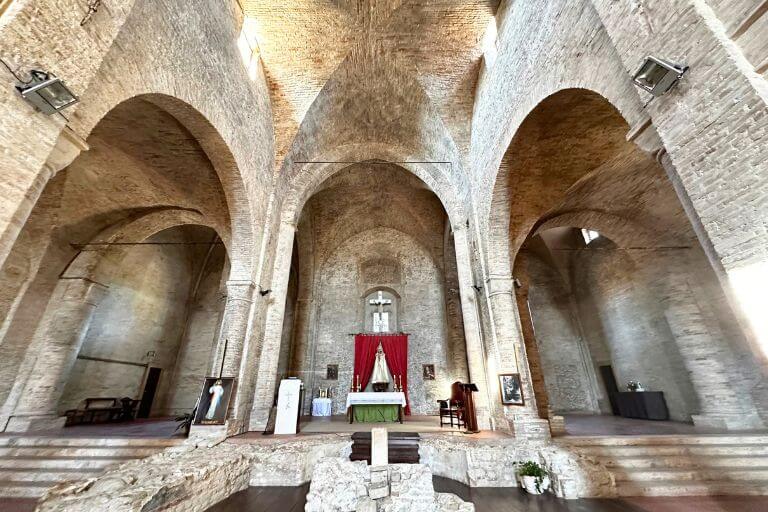
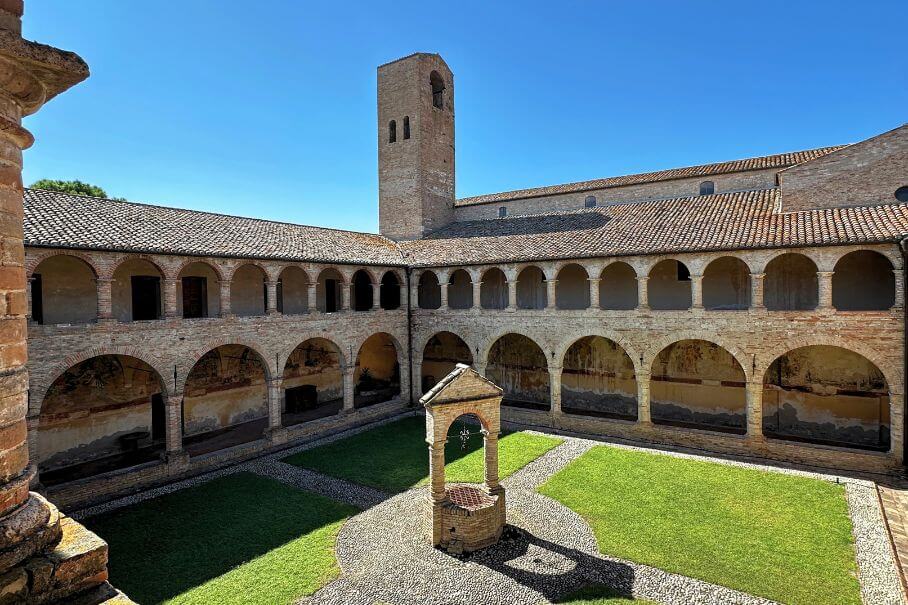
The cloister has arcades, an octagonal well and frescoed lunettes. Arrange access separately from the church visit so you can see both parts of the complex. As mentioned above, check out the winery connected to the cloister.
Read more: Propezzano history and access
Santa Maria di Ronzano
In the municipality of Castel Castagna, lies Santa Maria di Ronzano. It’s especially worth considering if you enjoy medieval art. The former Benedictine monastery has disappeared, but its church survives.
Read more: Ronzano history and visits
Brickwork and pale stone give the exterior its character. Inside, you can admire frescoes in the main apse that depict Christ, the apostles and scenes from the life of Jesus. Look around the outside too, where carved window details offer another reason to linger.
San Giovanni ad Insulam
Near Isola del Gran Sasso is the San Giovanni ad Insulam, also called San Giovanni al Mavone. Its carved entrance features animals and fantastic creatures, including lions, birds and dragons, but the most prominent feature is the bell tower.
Read more: San Giovanni history and visits
Once upon a time, the church was part of a Benedictine abbey complex. Unfortunately, very little of it remains. Pairing it with Ronzano would give you time to compare two very different churches without trying to cross the whole valley in a day.
Beyond the abbeys
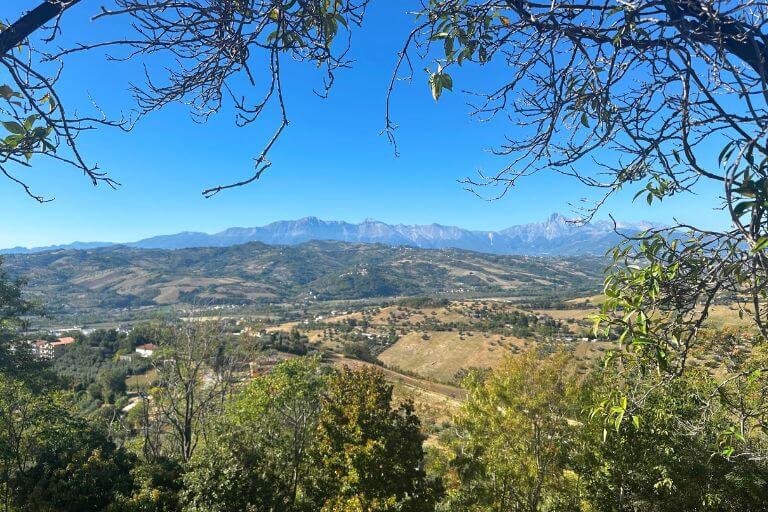
If you need a break from churches and want to check out a quaint hilltop town with amazing views, make sure to visit Castelbasso. This small hilltop village has a medieval layout of narrow lanes, two old gateways and little squares tucked between closely built houses. Don’t miss the panoramic views of the mountains from Piazza della Mura.
The village is compact, but its charm is in those small details. At its centre, the Church of Saints Peter and Andrew has a fourteenth-century stone portal. Palazzo Cancrini, Palazzo De Sanctis and Palazzo Clemente add another layer to the village streets, with the latter now housing the Fondazione Menegaz.
Art at the Fondazione Menegaz
The Fondazione Malvina Menegaz per le Arti e le Culture was established in 2008 by Osvaldo Menegaz, who named it after his mother, who was born in the village. It grew out of an earlier association that used cultural events to help revive Castelbasso.
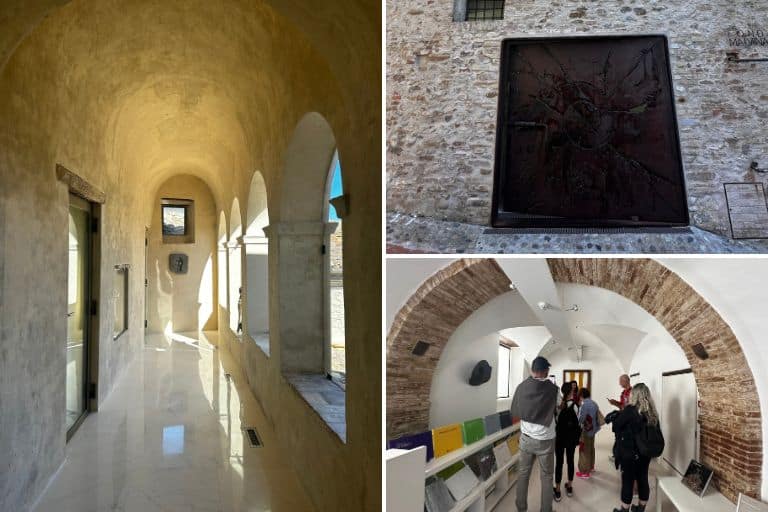
Located in Palazzo Clemente, the foundation puts on exhibitions and cultural activities, including music and literary events. Its history includes shows dedicated to artists such as Lucio Fontana and Mario Schifano, often featuring younger artists.
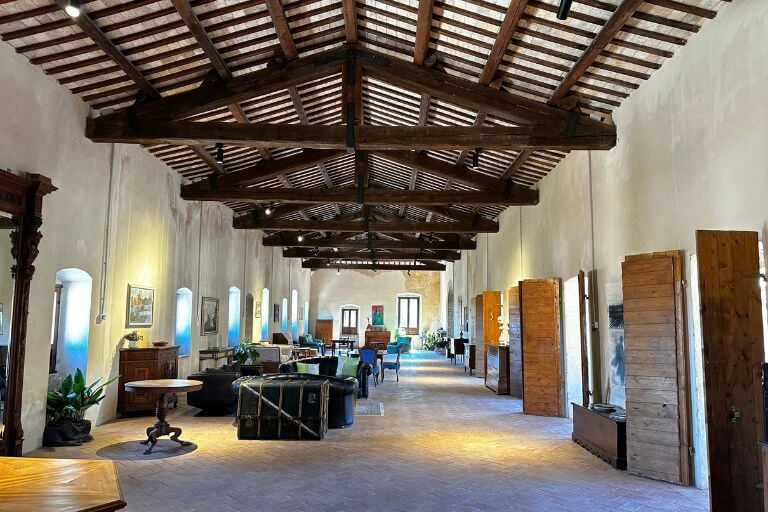
For me, part of the appeal was the palazzo’s restored interior. It was modern and sleek, yet it somehow worked in what was a historic residence. I would plan the village walk and gallery visit together, allowing time for both. Check the foundation’s programme before travelling, as exhibition dates, venues and opening arrangements vary.
Exhibitions and visitor information
The triangular tower of Montegualtieri
For another stop between abbeys, consider Montegualtieri, a small village in the municipality of Cermignano. Its 18-metre tower rises above a bend in the Vomano River and has an unusual triangular shape.
Read more: Montegualtieri tower and visits
The tower, built from local sandstone, was part of a defensive network of settlements. Its position helped watch over routes through the valley. Today, you can admire the views stretching across the valley towards the Adriatic and Gran Sasso. If you want to visit the interior or climb the tower, confirm access with the volunteer-run Associazione Pro Monte first. The official guide lists weekend openings and visits on request, but advises checking ahead.
Practical tips for your visit
I think the most practical and easiest way to plan your trip (at least for the first time) is to rent a car. It allows you the most flexibility, and you can travel at your own pace. Public transit is limited, and I don’t think it’s the easiest way to explore between the abbeys.
If you want to start from the coast, use Roseto degli Abruzzi as a starting point for planning your inland stops. From Teramo, choose the abbeys you want to see and map the route between them before you leave. Check live directions rather than relying on a single driving estimate for the whole valley.
Allow one day for a small selection of sights, or two to three days to add villages, walks and tastings. I would consider spring or fall for a trip with outdoor activities, while checking the forecast and opening arrangements for your dates.
Use the Valle delle Abbazie website to check individual sites and arrange a guide. Pick one route and start with a single abbey. Leave enough space in the day for whatever catches your attention along the way.