
Chieti Italy: Your Essential Visitor Guide
Chieti is an underrated town in Abruzzo that should definitely be on your radar. We moved here because it checks off everything we wanted: Roman ruins, a long and rich history, and pretty architecture with breathtaking views. It also gets bonus points because Chieti’s origins are steeped in myth.
When many people think of Chieti, they think of a province in Abruzzo. Chieti is both a city and a province, and it doesn’t get as much attention as other areas of the region. Think of this post as a Chieti travel guide from someone who absolutely loves living here and thinks you’ll love it, too. Here is what you need to know about visiting Chieti.
Introduction to Chieti
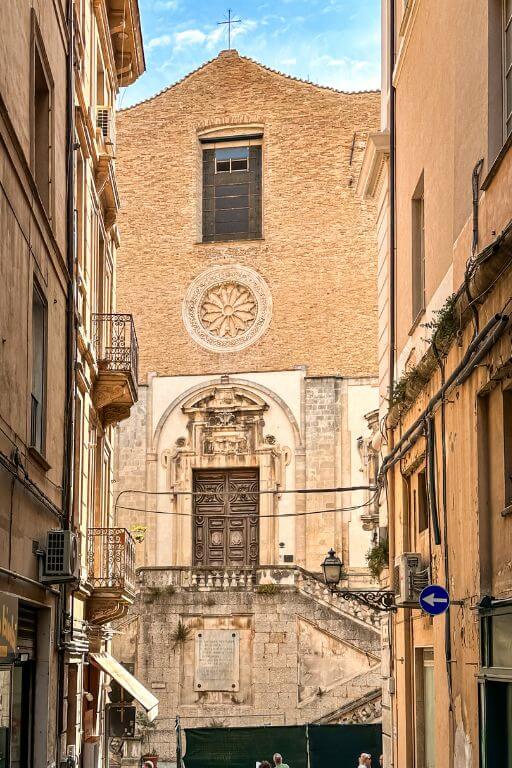
Chieti is located in that sweet spot between the mountains and the sea. It was built on a hill and can feel deceptively small. But once you walk along the maze of streets that haven’t changed in centuries, you realize that it’s bigger than you thought. Those narrow alleys winding up and down and around will definitely give you a workout.
You see, Chieti is one of Italy’s oldest cities. According to local legends, it was founded by followers of the mythological Greek hero Achilles, who settled here after the Trojan War. They named it after Achilles’ mother, Teti.
Whether you believe the legend or not, there has been human activity here since the mid-Paleolithic era. Before it became part of the Roman Empire, Chieti (town and province) was inhabited by the Marruci, one of the tribes of the Italic people, who later formed what is now known as Abruzzo.
Where is Chieti?
Chieti is in eastern Abruzzo, a short inland trip from Pescara. It sits on higher ground, which means you get great views and a bit of a breeze in warmer months. It also gets a fair amount of sunny days, which is definitely a bonus.
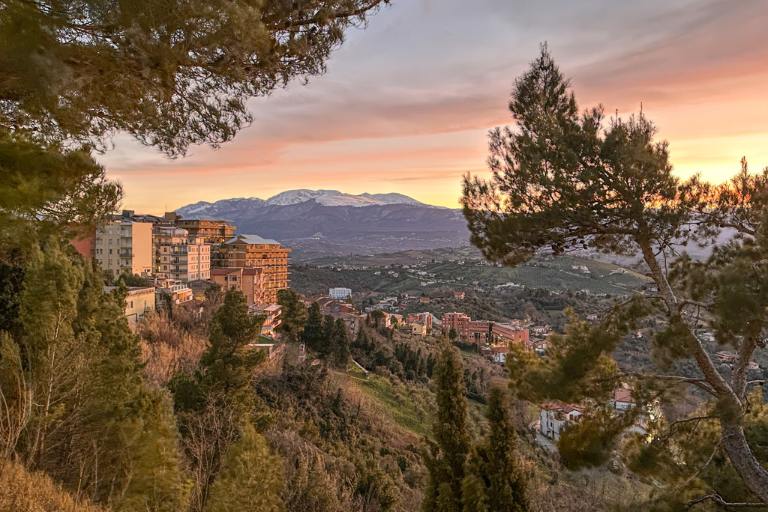
The city consists of three sections: Chieti Alta, Chieti Scalo, and Chieti Tricalle. Alta is the old city where we live and where most of the attractions are. Scalo is a newer part of the city, with the main train and bus stations. Tricalle is a residential area with great views of Old Town.
How to get to Chieti
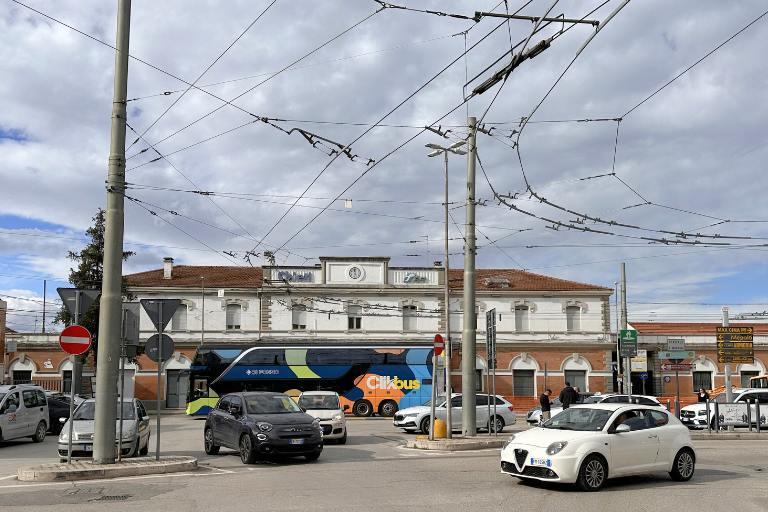
You can easily get to Chieti from Rome, Pescara or other cities by train, bus or car. You can check tickets and timetables for ClicBus, FlixBus and Protobus. The simplest options are:
- Train/bus to Chieti (Scalo) + bus up to Chieti Alta
- Car, if you prefer flexibility
There are different buses from Rome to Chieti Scalo, some from Fiumicino Airport or Tiburtina train station. Once you arrive at the Chieti Scalo train station (the bus also drops you off there), take the TUA Line 1 bus to the historic part. The bus stop is right outside the station area. You get your ticket from a machine on the bus.
The Abruzzo Airport (between Pescara and Chieti) has a direct bus connection to both Chieti Scalo and the historic centre. You can take the airport Airlink (operated by Trenitalia) or via the TUA portal.
Driving to Chieti (parking + ZTL basics)
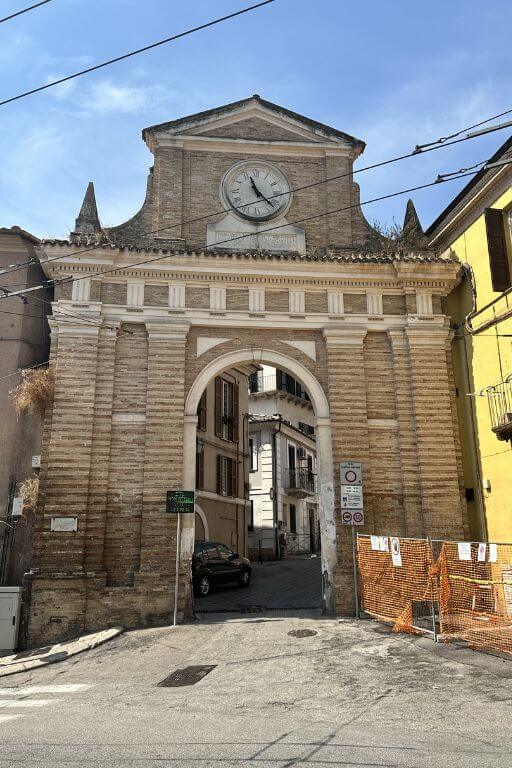
Like many Italian towns, Chieti has restricted driving zones (ZTL) in and around the historic centre. Entering them, even by accident, will result in a hefty fine. If you’re driving, I suggest you park once, then explore on foot.
The parking lot in Piazza Garibaldi is currently under construction. Instead, I recommend parking at the multistory parking garage (Parcheggio Communale Multipiano) on via Papa Giovanni XXIII. That way, you won’t have to worry about navigating the streets and accidentally driving through the ZTL zone.
Getting around Chieti
Chieti is very walkable, and walking is the best way to enjoy it. Just know it’s hilly, especially in the winding roads off the main strip of Corso Marrucino. While the streets aren’t cobblestone, you’ll still be walking, so wear comfortable shoes.
How to get between Chieti Scalo and Chieti Alta
The best way to get between the two areas is by driving or taking the bus. While all three are part of the city of Chieti, Scalo and Tricalle feel like separate towns. There is no safe way to walk between them, as you’ll encounter sections without sidewalks.
What to see and do in Chieti
Chieti was built on top of layers of history. If you know where to look, you can find traces of it all over the city. From ancient Roman baths, to temples and amphitheatres, to underground cisterns and wall remnants, there is plenty to get giddy about.
Visit one of the museums in Chieti
Chieti has a few museums and they are definitely worth exploring. While small in number, they are rich in history and offer a great way to understand this part of Abruzzo.
Museo Archeologico Nazionale La Civitella
The National Archaeological Museum “La Civitella” is an archaeological museum in Chieti. It sits at the highest point in town and focuses on the area’s ancient history.
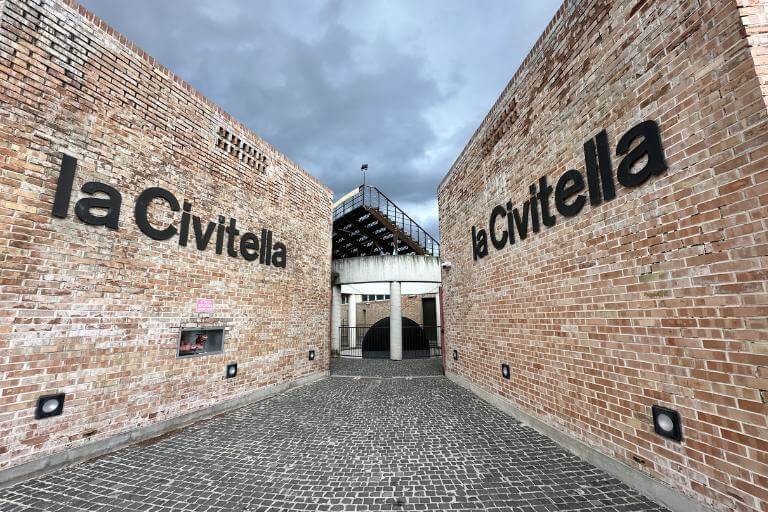
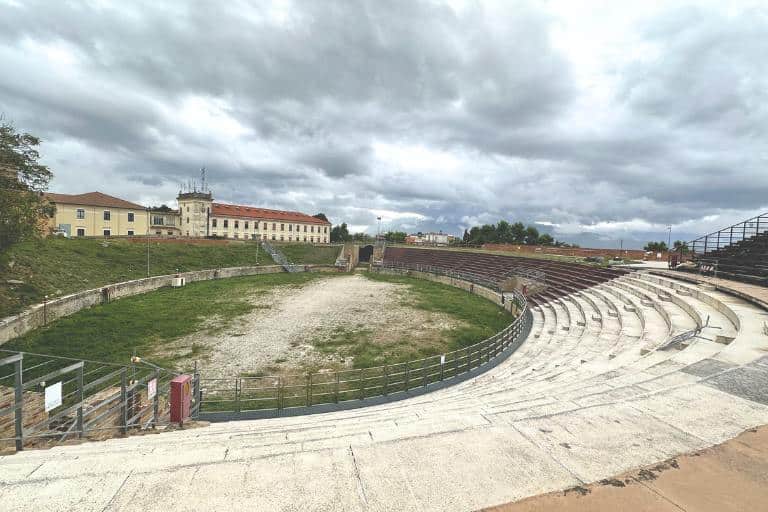
You can learn about Chieti and see historical photos of how the city used to look. The exterior incorporates what was once a Roman amphitheatre and offers amazing views of the mountains.
- Location: Via Generale Pianell, Chieti
- Cost: €5, free on the first Sunday of the month
- Hours: Tuesday to Sunday 9 am to 7:30 pm (closed Mondays)
- Website
Museo Archeologico Nazionale d’Abruzzo – Villa Frigerj
This museum, housed in an elegant villa in a park, is another excellent stop for archaeology and regional history. It’s a great museum that won’t feel overwhelming. I was impressed by the coin collection from antiquity.
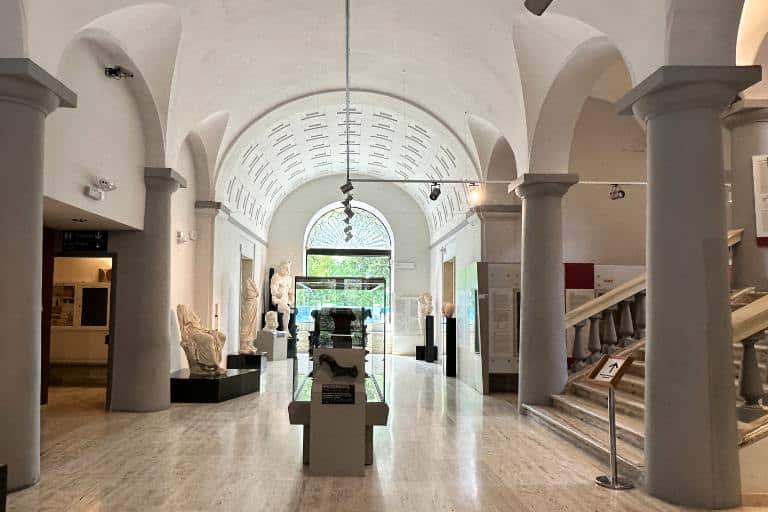
Here you can also find the famous statue of the Warrior of Capestrano (Il Guerriero di Capestrano). Found in 1934 in a Picene necropolis, this 6th-century BC limestone sculpture of a warrior stands over 2 meters tall and features a distinctive wide-brimmed helmet. It is an iconic symbol of Abruzzo’s regional identity.
- Location: Via Guido Costanzi 2, Chieti
- Cost: €5, free on the first Sunday of the month
- Hours: Tuesday to Sunday 9 am to 7:30 pm (closed Mondays)
- Website
Costantino Barbella Art Museum
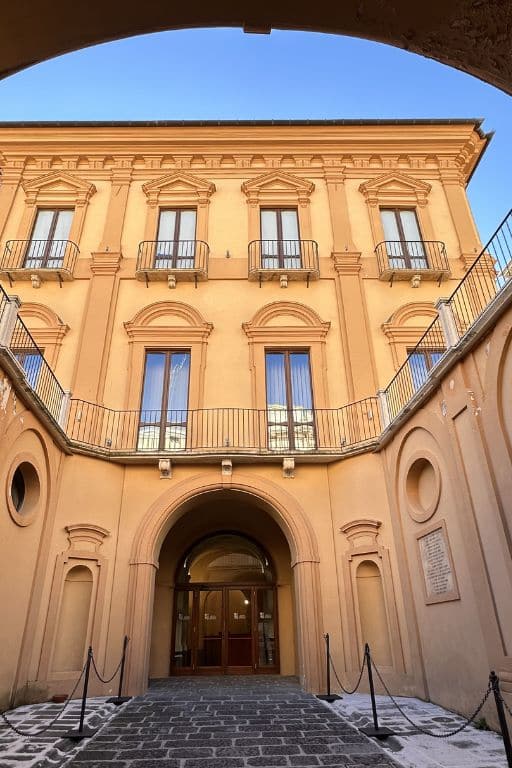
Housed in Palazzo Martinetti Bianchi, this small museum is a great spot for art lovers. There are paintings (15th–19th century), sculptures by Costantino Barbella, works on paper, rotating works tied to the Premio Michetti, and Castelli maiolica ceramics.
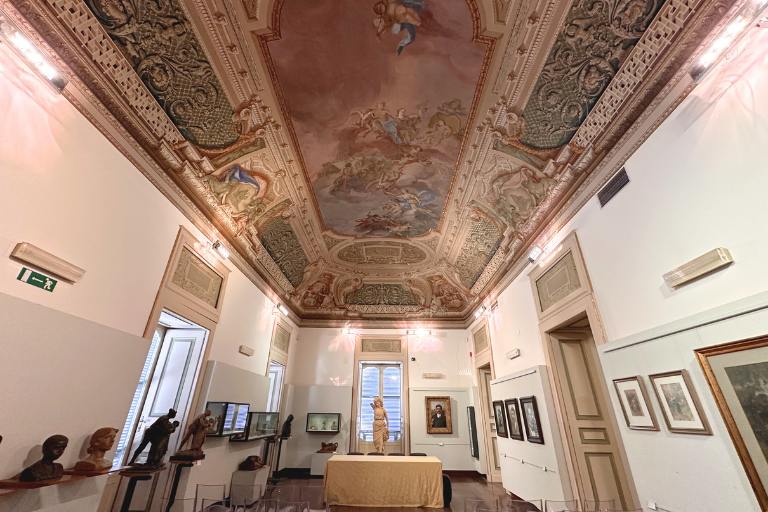
Don’t miss the Paglione donation of paintings, which adds 20th-century names like Giorgio de Chirico, Giacomo Manzù, Renato Guttuso, and Aligi Sassu. This section is located on a different floor, so it’s easy to miss.
- Location: Via Cesare De Lollis, 10, Chieti
- Cost: Free on the first Sunday of the month
- Hours: Tue & Thu 9 am to 1 pm and 4–17 pm, Wed/Fri/Sat 9–1 pm, first Sunday of the month 9–12 noon.
- Website
University Museum of Chieti
This science-focused museum is run by Università degli Studi “G. d’Annunzio” Chieti-Pescara. If you love natural sciences and the history of science, you have to add this museum to your list.
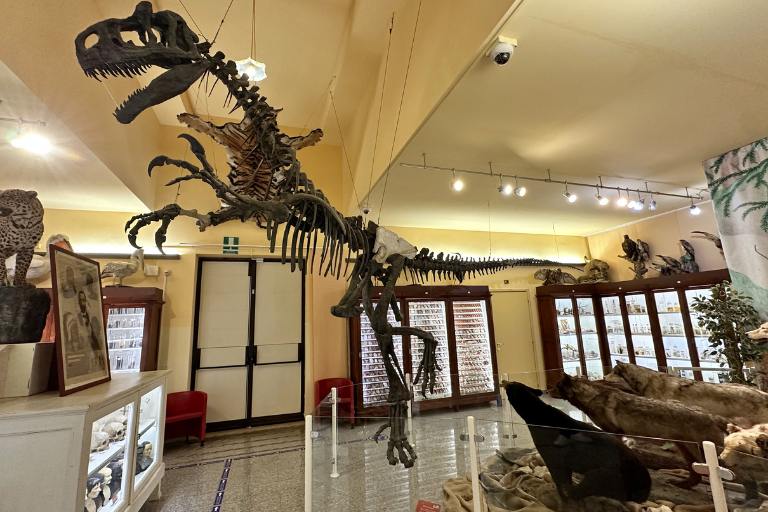
The museum houses nearly 20,000 objects across natural history, paleontology, anthropology, scientific instruments, and smaller specialist areas such as numismatics and art collections. Plus, dinosaur bones!
- Location: Piazza Trento e Trieste, Chieti
- Cost: €3
- Hours: Tuesday to Friday 9 am to 7:30 pm, Weekends 3 pm to 8 pm (closed Mondays)
- Website
Walk along the Corso Marrucino
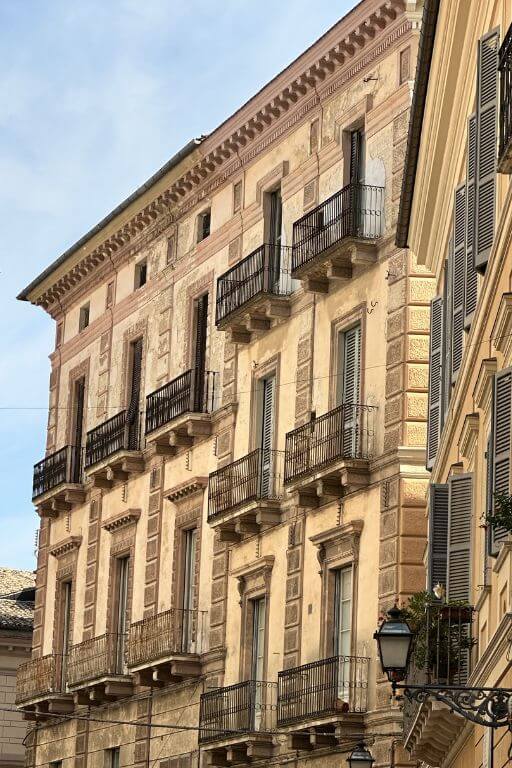
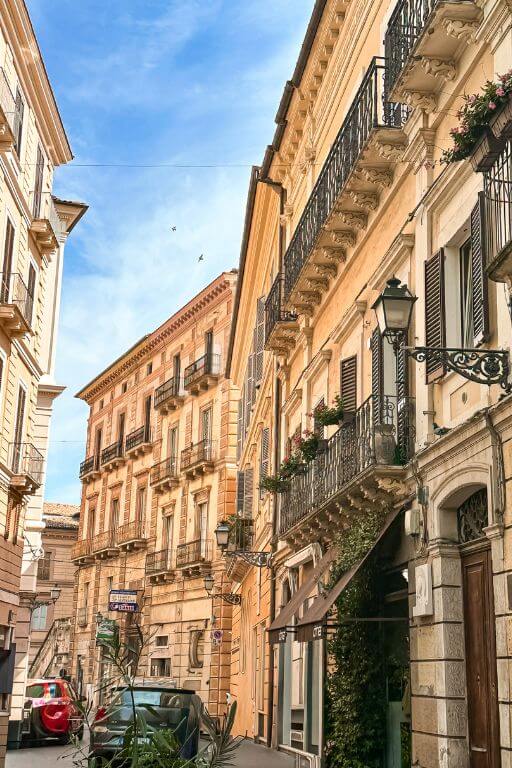
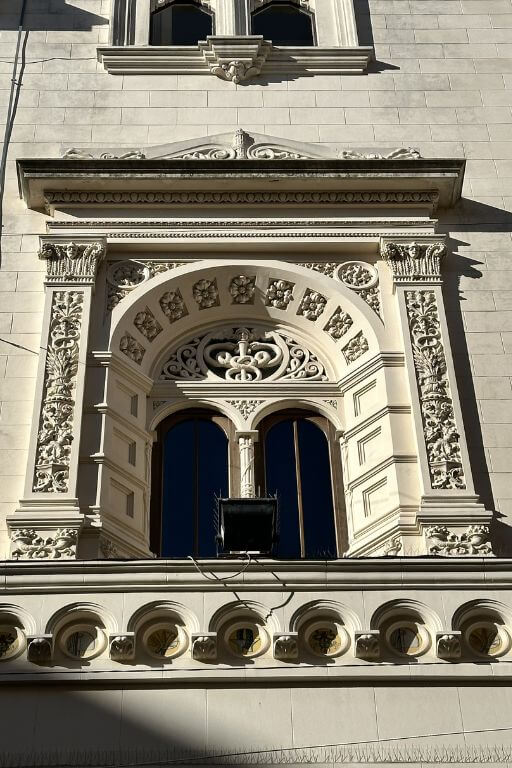
Corso Marrucino is the main pedestrian road, and it’s the easiest place to get your bearings. It’s a good mix of architecture, shops and bars that offer the everyday Italian city feel. Make sure to look up, as there are beautiful architectural features that make this place so special to me.
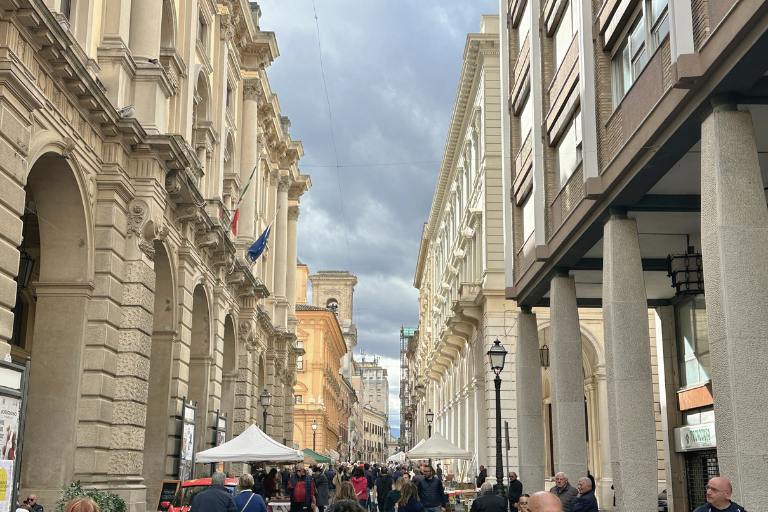
The corso has a mix of beautifully restored buildings, some currently being restored and those that could use some TLC. This area is usually busy in the morning, early evening and during any events in town. Go in the middle of the day or at night to enjoy it by yourself.
Take a break at Villa Comunale
If you want a peaceful pause, the Villa Comunale park is a lovely place to slow down. It’s a lovely park anchored by a fountain and a pond with turtles. From here, you can easily access the archaeological museum in Villa Frigerj or have a drink on the patio at the Casina dei Tigli bar.
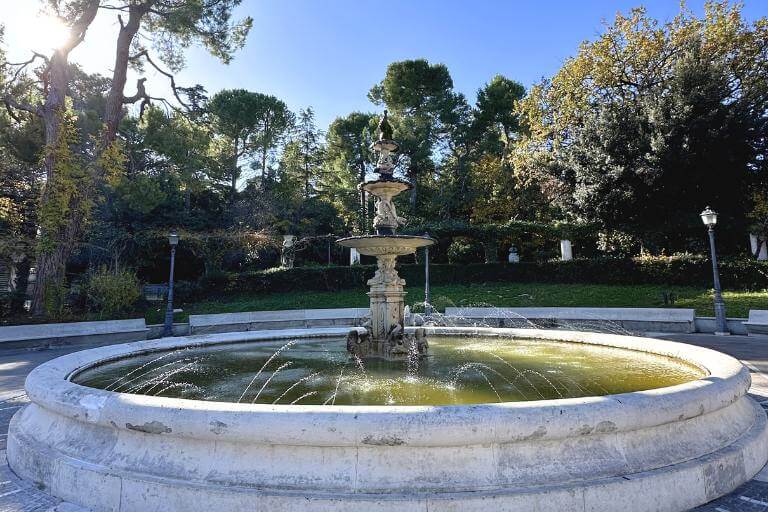
The park also has tennis courts, benches and tree-lined paths. The local market takes place here on Tuesdays and Fridays. It works well between sightseeing stops and gives you a change of pace.
Get lost in the historic streets
Most people who come to Chieti stick to the corso, walk back and forth, then call it a day. Granted, it’s not a massive city, but it’s definitely bigger than it looks. Take a turn into one of the streets off Corso Marrucino, and you can find yourself in narrow streets that wind up and down and around.
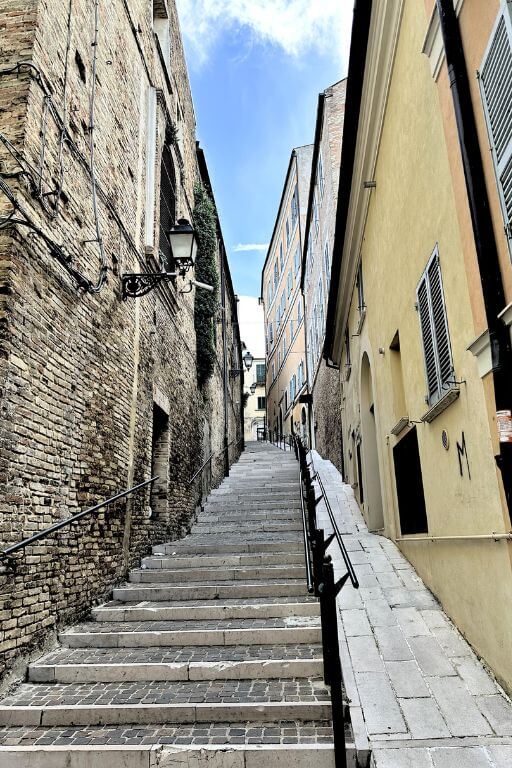
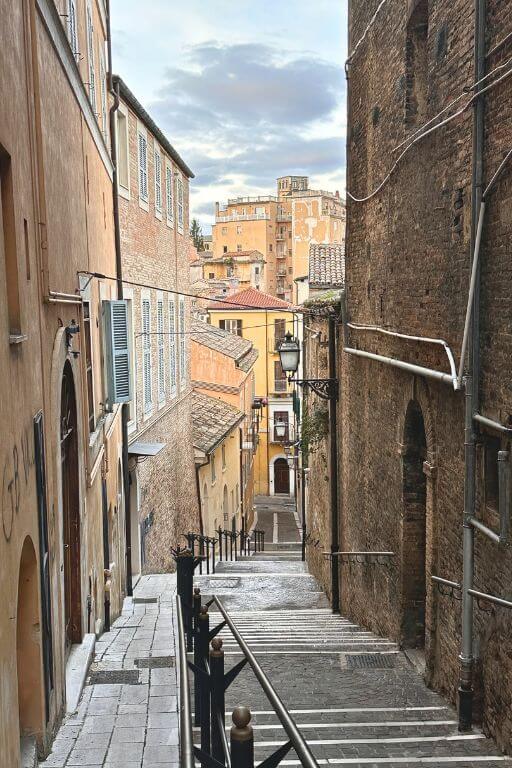
This is one of my favourite things to do when I go for a walk. Just when I think I’ve discovered all there is to do, I find another street that takes me to a place I haven’t seen before. Don’t be afraid to wander off, but keep in mind that you might end up going up or down quite a bit.
Catch a show at Teatro Marrucino
Built in 1818, this beautiful neoclassical theatre is one of Abruzzo’s most elegant cultural venues. The interior features red velvet seats, ornate boxes, and a painted ceiling that rivals those of theatres in much larger Italian cities.
Check the official website for opera, theater and concert schedules before your visit.
Even if you don’t catch a performance, ask at the box office about guided tours (English, French, German or Spanish tours are available upon request). The tour lasts about an hour and includes the theatre hall, historic foyer, bar, and library.
Walk in the footsteps of ancient Romans
The Chieti you see today was built on top of the Roman city. You can spot pieces of old walls and foundations in many parts of the city. While you can’t access them directly right now, you can still enjoy the glory that once was. Here are my top recommendations for where to spot them:
Roman baths
Chieti had a robust bath system outside the old city walls. Today, the baths are not open to the public, but you can view them from the street. There is an extensive cistern system under the current city that extends well into the centre. Unfortunately, they’re not open to the public, but there is talk of opening them.
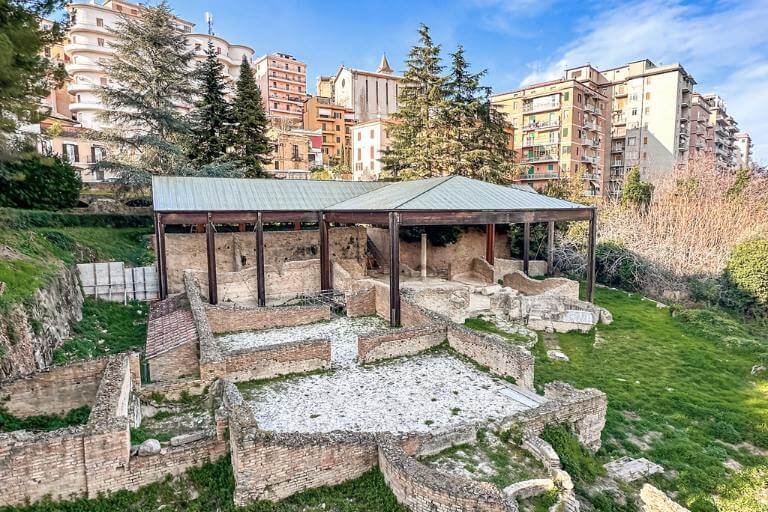
Roman Temples (Tempietti Romani)
There are three small Roman temples from the 1st-2nd century on via Marco Vezio Marcello. They’re remarkably well-preserved considering they’re right in the middle of the city. The temples once stood in the forum of ancient Teate (Roman Chieti) and give you a sense of how important this city was during the Roman Empire. You can view them from the street for free. There are also talks about reopening them to the public.
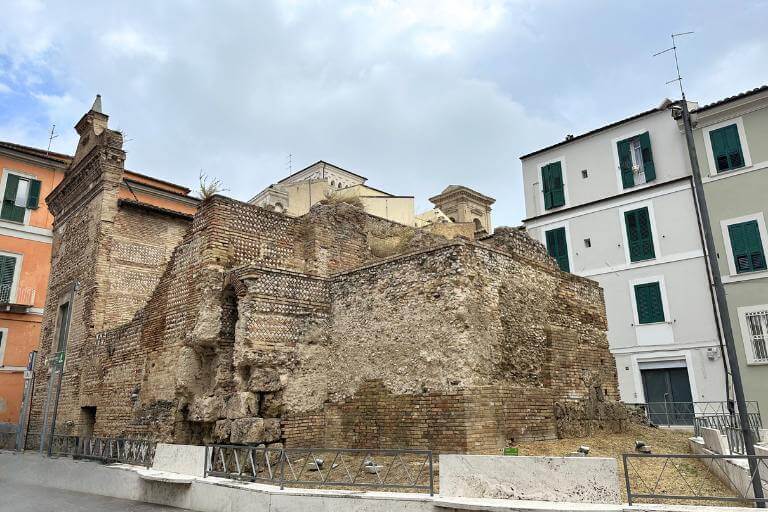
Teatro Romano
On the corner of via Asinio Herio and via di Porta Napoli, you can find part of what was an ancient Roman theatre. Over time, they built housing around it and incorporated the rest, so today there is not much to see other than the part along the street. The Civitella museum has historical images of the area, so you can see what it looked like in the past.
Roman amphitheatre (Civitella Museum)
The ancient amphitheatre is incorporated into the Civitella Museum, so you can’t see it unless you go inside. So if you’re not sure if which museum to check out, this might be a good reason to go to this one.
United Colors of Benetton store
Many buildings along the Corso Marrucino have parts of Roman walls built into them, but you can’t necessarily go into all of them. The United Colors of Benetton store features glass panels on the floor that reveal Roman foundations beneath. Sometimes they are illuminated, which allows you to see them better.
Check out the churches in Chieti
Chieti has several interesting churches that are worth checking out.
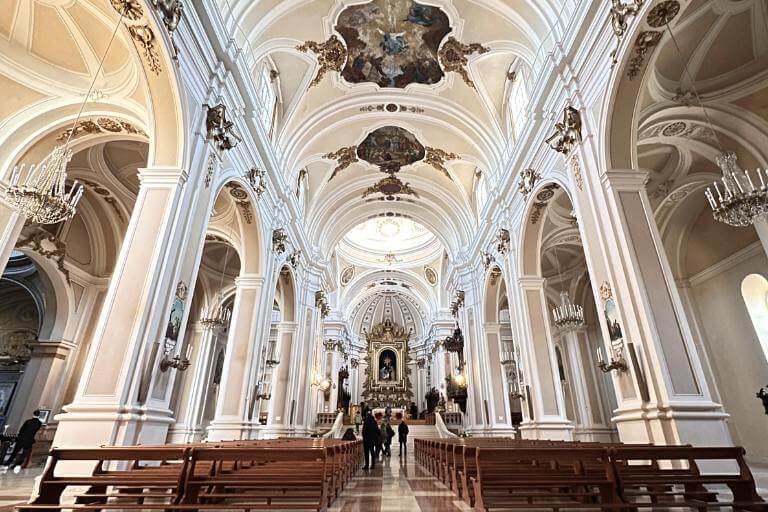
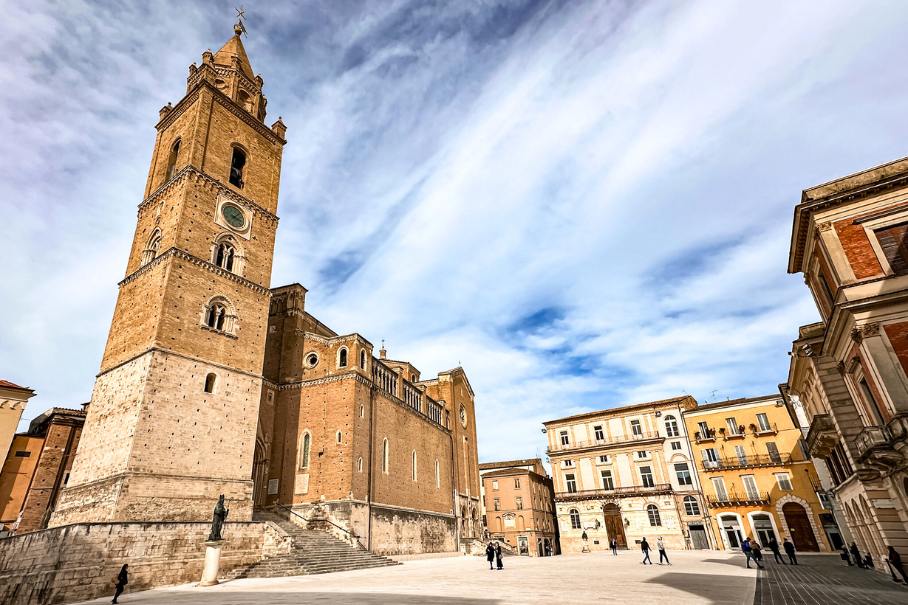
- Cathedral of San Giustino: Chieti’s main cathedral, in Piazza SanGiustino, dates back to the 9th century. It was built on the site of a 5th-century church, which in turn stood on an ancient Roman temple dedicated to Hercules. The cathedral was rebuilt in the 13th century after an earthquake and has undergone several updates since then.
- Chiesa di San Domenico al Corso: Baroque church located in the Corso Marrucio. Founded as a monastery dedicated to Saint Anne, it was run by the Piarist monks of Saint Joseph Calasanz. From the second half of the 17th century, it housed a school of classical studies. In September 1861, it became one of the first royal classical high schools in Abruzzo.
- Chiesa Parrocchiale Mater Domini dei Frati Cappuccini: The church and convent were founded in 1584. The site was an ancient monastery of Santa Chiara. It served as a centre for theological and philosophical studies for the Capuchin monks for over two centuries. The facade feels more modern than that of other churches, but it’s interesting to visit if you’re in the area and it’s open.
- Chiesa di San Francesco al Corso: Also known as San Francesco della Scarpa). This is one of the oldest and most historically significant religious buildings in Chieti. The church dates back to the 13th century (approx. 1239), following the arrival of the Franciscan order in the city. Currently, it’s under renovation.
Piazzas and squares
Chieti has several squares and piazzas where people gather and also use as a point of reference. Here are the main ones:
Piazza San Giustino/Piazza Vittorio Emanuele II
In the past, this area was used as a parking lot. Today, the two piazzas are one and are used for major events in the city. Here you can find the Chieti cathedral, several historical buildings, including the beautiful, yet neglected Palazzo Mezzanotte. There are a couple of bars and a restaurant, but this place doesn’t get that busy in the evening.
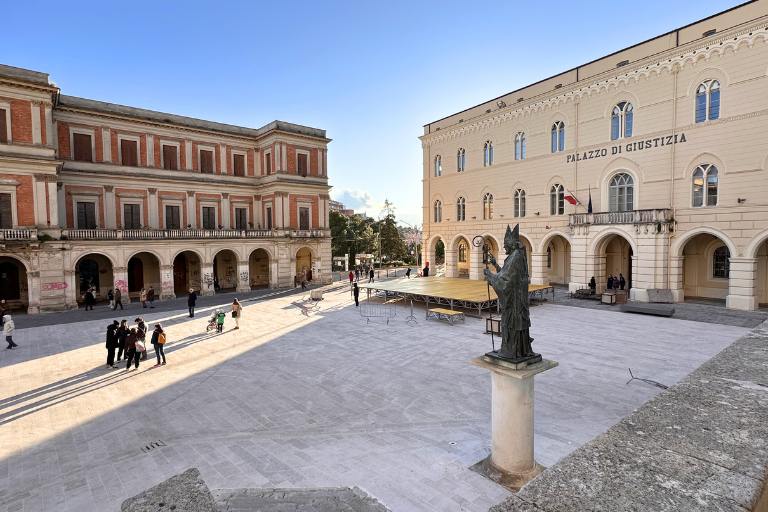
There are crypts and cisterns under the piazza, which will be opened to the public sometime in 2026. I’m very excited to check them out and will update this post with relevant information once they do open.
Piazza GG Valignani
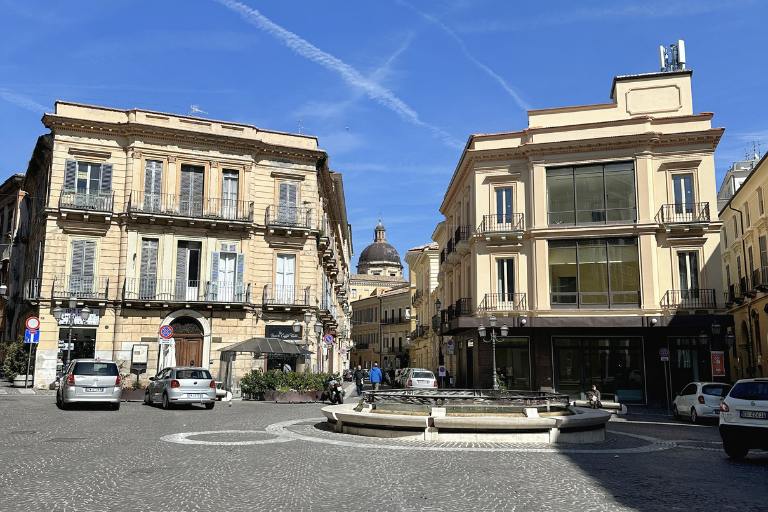
Here you’ll find a round fountain and the Marrucino Theatre. This marks the beginning of the Corso Marrucino.
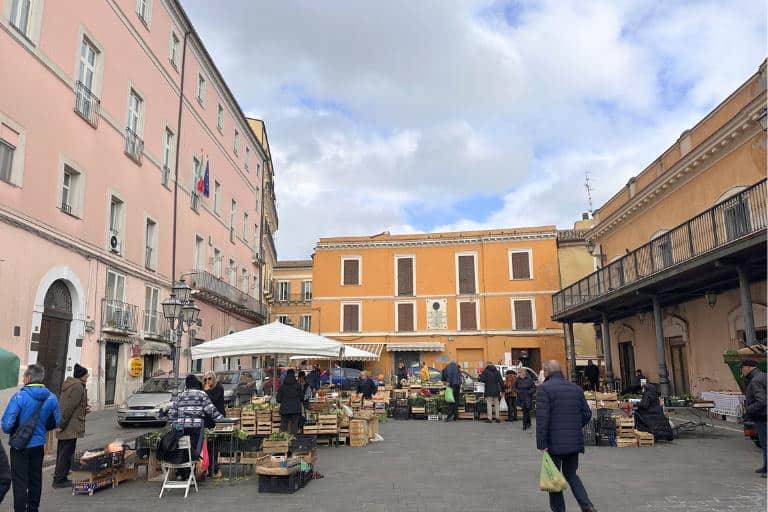
Piazza Malta
A small, historic square that hosts a fruit and veggie market in the morning. The square has seen better days, and I hope they revitalize it, as there is a lot of potential here. It’s worth stopping by if you’re in the area.
Largo Gian Battista Vico
This is the prettiest square in Chieti along the Corso Marrucino. If you’re looking for a break in a spot with a view, make sure to grab a coffee or a drink at the BonBon in Centro bar in the corner of the square.
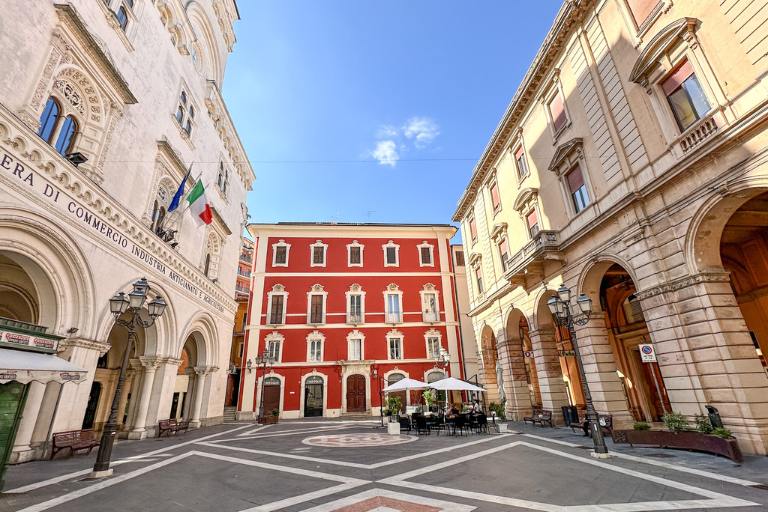
Piazza Trento e Trieste
This is the other end of the Corso Marrucino. Here you’ll find several bars and the University Museum of Chieti. It’s a lively space, especially in the morning and evening. From here, you can get to the park and the weekly market.
How long should you stay in Chieti?
Most visitors spend half a day or a full day, which might be enough if you want to check out the highlights and move on. Staying overnight makes sense if you want to spend time at the museum, have long meals, and enjoy a slower pace.
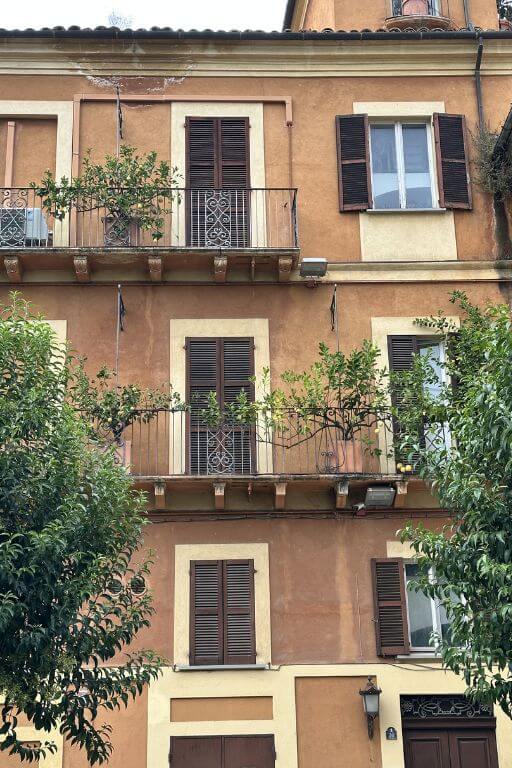
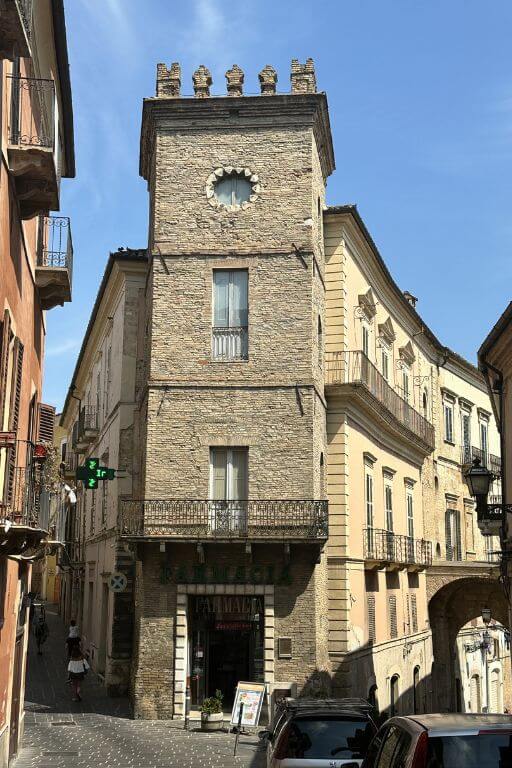
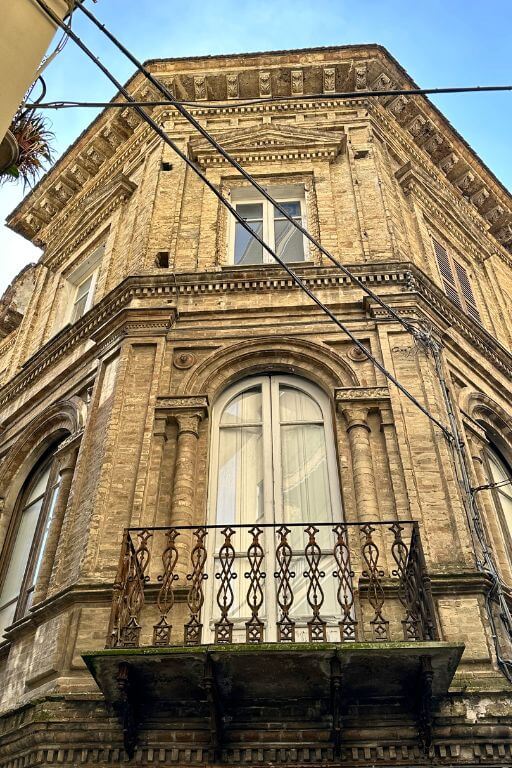
I think Chieti is a great weekend getaway, and I would recommend spending a couple of days here to get a feel for the place. Or if you also want to check out Chieti Scalo
Where to stay
Chieti doesn’t really have large hotels. There is one 3-star hotel that looks pretty dated (although it has great reviews). You can choose an Airbnb or private lodgings for a chance to stay in a historic place.
Final thoughts
I love living in Chieti because it’s a historic city that feels authentic. Yes, the city has many vacant properties and storefronts, and some buildings could use a bit of TLC. There are several urban regeneration and redevelopment projects underway to revitalize the city and its historic heritage.
I hope it gets the love it deserves, because it is a spectacular place that more people should get to know. In the meantime, I will keep updating this Chieti travel guide with any new openings or attractions, so stay tuned and check back often.
