
DISCOVER
Flavours of Abruzzo
Discover what to eat, the best wines, food tours and cooking classes across Abruzzo.
Most people who come to Italy don’t put Abruzzo on their food list. Rome, Bologna, Naples — sure. But Abruzzo? It tends to get overlooked. Since moving here, we’ve discovered flavours of Abruzzo that hold their own against any of them.
Add serious wines, centuries-old sweets and a culture that treats eating as something to take your time over, and you’ve got a food destination worth planning a trip around.
What Abruzzo food is known for
Abruzzo cooking comes from the land and the sea, and not much has changed over the centuries. Inland, shepherds fed families on lamb, pork, pulses and whatever the garden produced. On the coast, fishing towns kept it simple: fresh catch, good olive oil, bread.
What makes it special is how little gets in the way. Ingredients are strong, preparation is direct, and portions are generous. A few things stand out across the whole region: arrosticini (lamb skewers), chitarra pasta, Montepulciano wine and a sheep’s milk cheese called pecorino that turns up on almost every table.
Looking for hikes, beaches and hill towns too? Head to Things to do in Abruzzo.
The coast feels like a different place entirely. Seafood leads every menu, the pace is lighter, and a meal on a trabocco — one of the old wooden fishing platforms that jut into the sea — is unlike anything else in Italy.
Must-try dishes in Abruzzo
Arrosticini
These are small skewers of lamb or mutton, cut into cubes with about 25% fat to keep them juicy, threaded onto thin wooden sticks and grilled over charcoal. They come in bunches (often 20 or 30 at a time), and you eat them straight off the stick, pulling the meat with your teeth.
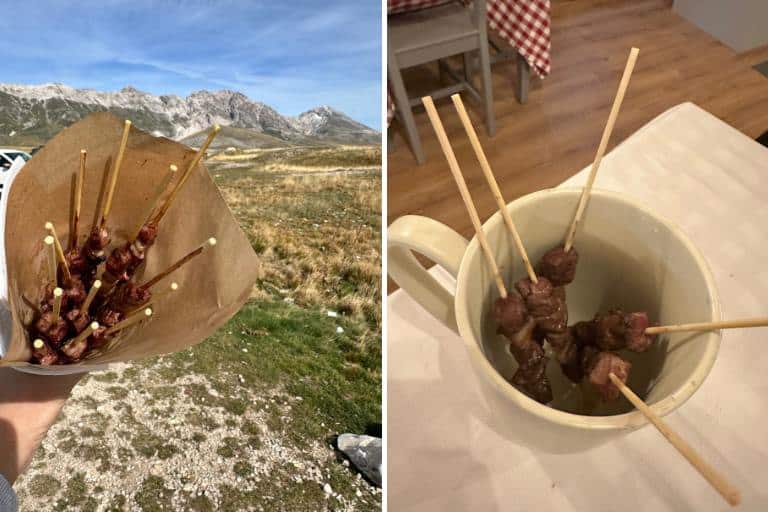
Order them at any sagra (local food festival), roadside grill or mountain trattoria. They’re cheap, fast and addictive. Don’t confuse them with regular kebabs. The cut, the fat ratio and the charcoal heat are what make them Abruzzo’s own.
Pasta
Spaghetti alla chitarra is the one dish you’ll find everywhere, and for good reason. The dough is pressed through a wooden frame strung with guitar-like wires (the chitarra) to create square-edged spaghetti. It’s usually served with lamb ragù, a light tomato sauce or sometimes just olive oil and local pecorino.
Ragù alla Abruzzese is slow-cooked with lamb or mixed meats, sometimes with sweet peppers (peperoni cruschi) added for depth. It’s nothing like the beef-heavy Bolognese you might know — it’s lighter, more fragrant and distinctly mountain in character.
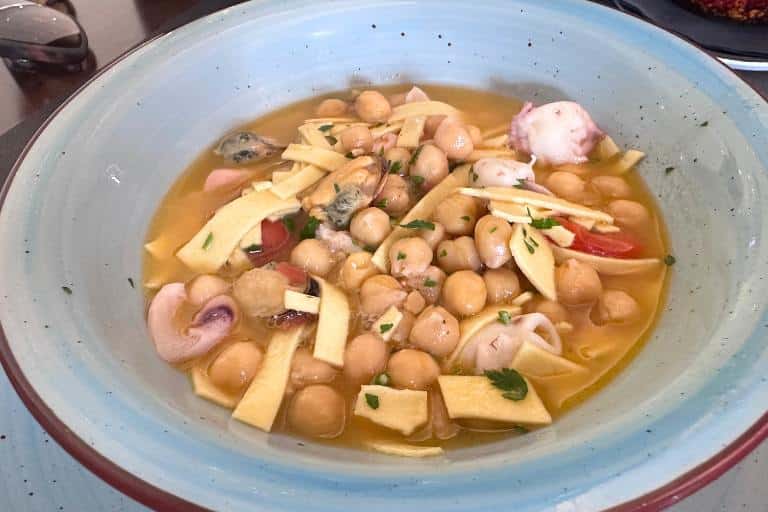
Sagne à ceci is a short, flat pasta often made with chickpeas. It’s more of a stew than a liquid soup, and you can find it on menus across the region. It’s simple, filling and often better than anything you’d expect.
Timballo di scrippelle is a showpiece dish from the Teramo area. Timballo is layers of thin crêpes (scrippelle) filled with tiny meatballs, hard-boiled egg, cheese and ragù, then baked in a mould until it holds its shape and slices like a cake. It takes hours to make, and that’s why it’s rarely on everyday menus. If you spot it, order it.
Seafood dishes along the coast
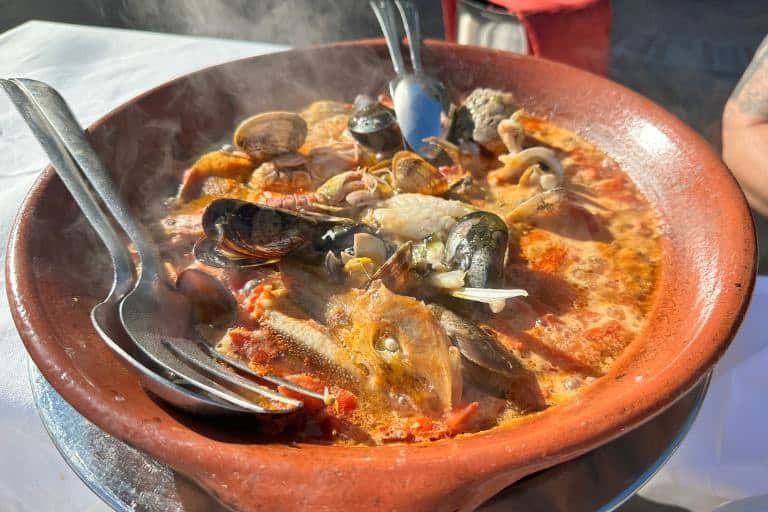
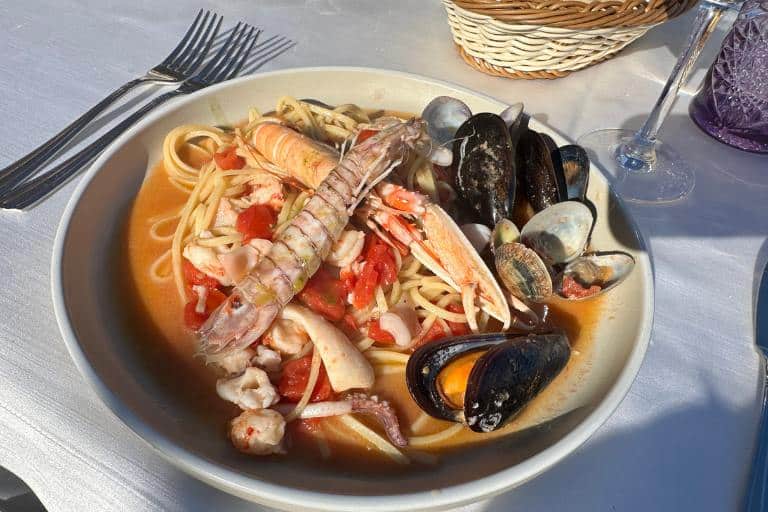
The Adriatic changes everything. Switch from lamb and pasta to grilled squid, fried anchovies, brodetto (a rich fish stew with saffron and peppers) and spaghetti with clams or mussels. Almost every coastal town has its own brodetto recipe, and locals will argue about which is correct.
Scapece is a Vasto specialty — fried fish preserved in vinegar and saffron, layered in wooden barrels and aged for days. It sounds strange and tastes extraordinary. Look for it at coastal food markets.
Desserts and sweet specialties
Sulmona is the home of confetti — not the paper kind, but sugared almonds in brilliant colours, sold in the shape of flowers, fruit and elaborate bouquets. Shops along Corso Ovidio have been selling them for centuries. Modern flavours include Nutella and tiramisù, but the traditional almond and lemon versions are the ones to try.
Parrozzo is a dome-shaped cake made with almonds and semolina, coated in dark chocolate. It was created by Luigi D’Amico, a pastry chef and entrepreneur from Pescara. It’s a popular treat during the Christmas season in Abruzzo and beyond.
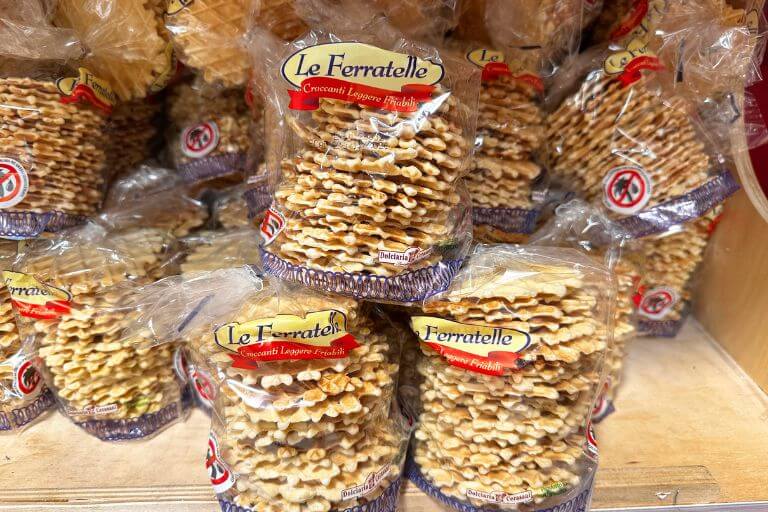
Ferratelle are thin waffle-like biscuits pressed in iron moulds, often flavoured with anise or lemon, and sold at every market stall. Take a bag home.
Abruzzo wine guide for travellers
The region produces serious wine on a large scale. Most vineyards sit on hillsides between the mountains and the sea, where warm days and cool nights build good structure in the grapes.
Montepulciano d’Abruzzo
This is the red wine Abruzzo is known for. It’s made from the Montepulciano grape (not to be confused with the Tuscan town) and produces a deep ruby wine with aromas of dark cherry, violets and a hint of spice.
It’s full-bodied but not heavy, with enough tannin to stand up to lamb, grilled meats and hard cheeses. Most bottles are good value for the quality. Wineries around Pescara, Chieti and Ortona produce the best examples.
Trebbiano d’Abruzzo
The main white of the region and one of Italy’s finest whites, with mineral depth and real ageing potential. At the entry level, it’s a clean, food-friendly everyday wine. Drink it with seafood, light pasta or just a glass at lunch on the coast.
Pecorino
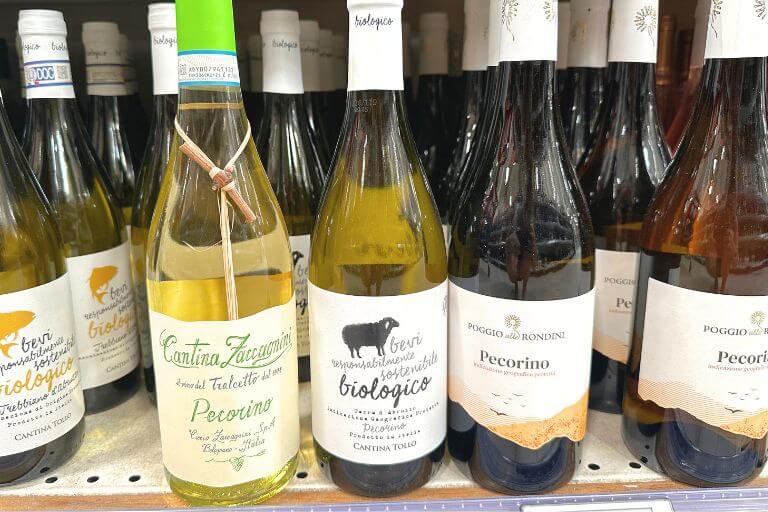
Pecorino (the grape, not the cheese) makes a richer, more aromatic white with stone fruit flavours and a slightly nutty finish. It pairs well with grilled fish, pasta with clams or a plate of local affettati. Perfect for summer.
Cerasuolo
Cerasuolo d’Abruzzo is a cherry-pink rosé made from Montepulciano grapes. It’s dry, food-friendly and one of the better rosés in Italy. It works with arrosticini, grilled vegetables and anything off the grill.
Ratafia
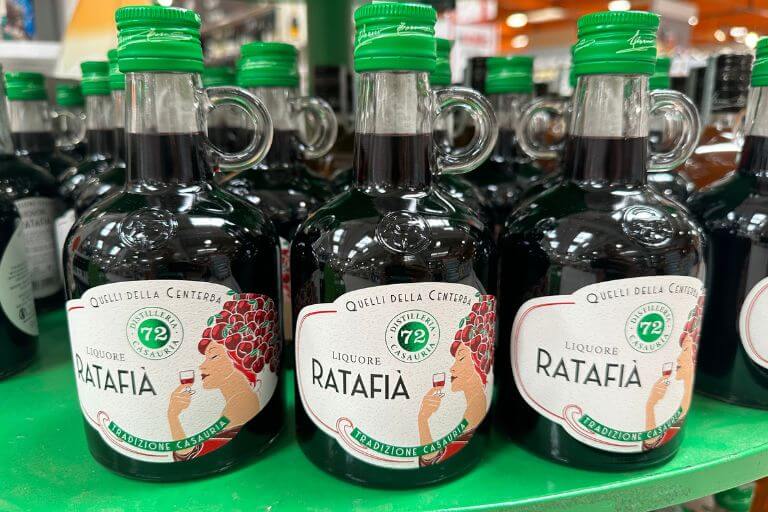
Ratafia is a traditional Abruzzese liqueur made with Montepulciano d’Abruzzo wine and sour cherries. You can find it in grocery stores in the wine section.
Where to go for wine tasting in Abruzzo
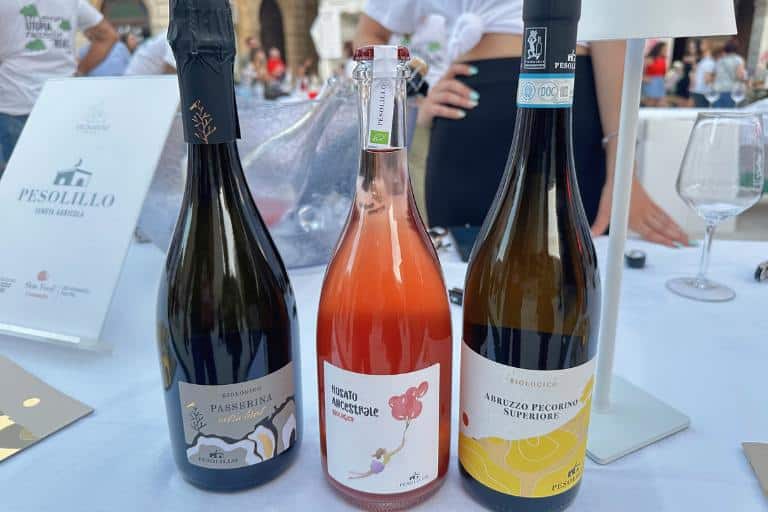
The hill towns between Pescara and Chieti sit in the middle of the main wine country. Vineyards are dense here, and many wineries welcome visitors for tastings and cellar tours.
The Colline Teatine, around Chieti, and the hills above Ortona are good starting points. Further south, Vasto and the area around Lanciano also have excellent producers.
Food experiences worth booking in Abruzzo
Abruzzo, much like the rest of Italy, is an ideal destination for foodies. From cooking classes, food tours and wine tastings to unique dishes tied to the area, you’ll have plenty of choices to feed your taste buds.
Cooking classes (hands-on local food)
A cooking class in Abruzzo usually means learning from someone who grew up making the food. You might spend a morning making chitarra pasta from scratch, rolling crostoli pastry or putting together a full Abruzzese meal from market ingredients.
Classes often start at a local market to choose what’s in season, then move to the kitchen. Good for: families, food lovers, people who want to take something home beyond photos. Most classes run for half a day and include the meal you’ve made.
Food tours (markets, tastings, local spots)
A guided food tour covers more ground in a few hours than you’d manage alone. Expect to visit a market, try local specialties at small producers, taste wine and olive oil and finish with a sit-down meal or a spread of local products.
Tours based in Pescara or Chieti work well for visitors without a car, since most run from the city centre. Good for: short stays, first-time visitors and anyone who wants context for what they’re eating.
Farm meals and agriturismo lunches
An agriturismo is a working farm that serves food, sometimes offers rooms and usually grows or raises what ends up on the table. Meals here are slow, seasonal and generally excellent value. You sit outside if the weather allows, drink the house wine and eat whatever came out of the ground or off the farm that week.
It’s not a restaurant experience. There’s usually no menu and little choice, but that’s the point. The pace is the attraction. Book ahead, confirm the time and don’t plan anything for the afternoon.
Trabocco dining on the coast
The Trabocchi Coast runs south of Ortona along the southern Adriatic shore. Trabocchi are old wooden fishing platforms that extend out over the water on stilts. They were built so fishermen could cast nets without going out to sea.
Today, some of the best ones have been converted into seafood restaurants. You eat on the platform itself, with the sea below you and the coast stretching away in both directions. The fish is local, and the menu changes with the catch.
Book ahead in summer — tables fill fast, and the experience is worth planning around. Lunch is the best time; the light is better, and the crowds are smaller.
Food markets and local products to bring home
Abruzzo’s weekly markets are worth planning around. Most towns hold a market once or twice a week, selling seasonal produce, local cheese, cured meats, olive oil and preserved foods alongside clothes and household goods.
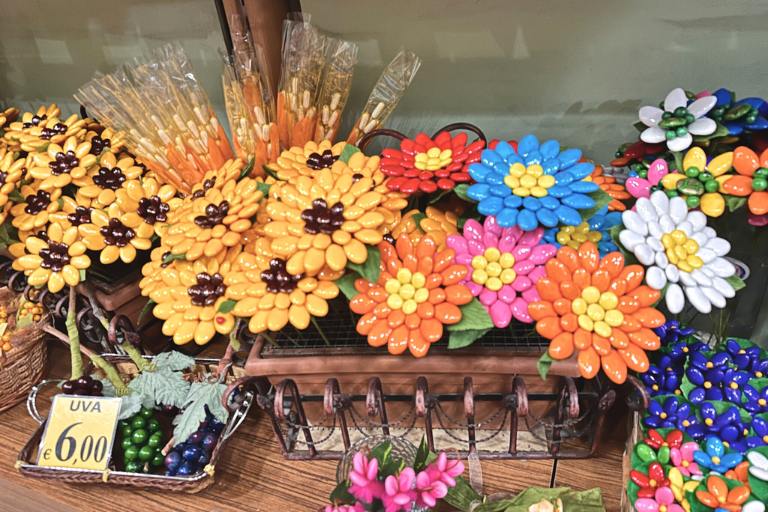
What to look for: fresh pecorino at various ages, local salumi (especially ventricina, a spiced spreadable pork sausage), dried pasta from small producers, peperoni cruschi (dried sweet peppers, a southern Abruzzo staple) and confetti from Sulmona.
Food festivals and sagre in Abruzzo
Food festivals (called sagre) are some of the best ways to immerse yourself in the flavours of Abruzzo and eat local for very little money. Most are free to enter and built around a single ingredient or dish, cooked in large quantities and served at long outdoor tables.
- Spring (March–May) The hills are green, and the towns are quiet. Spring sagre celebrate wild herbs, asparagus and early-season cheeses. Lamb appears everywhere for Easter, often roasted whole or cooked with eggs and pecorino. It’s a good time for farm lunches and market visits before the summer heat arrives.
- Summer (June–August) The coast comes alive with seafood festivals, night markets and outdoor eating. Towns along the Trabocchi Coast hold sagre focused on fresh fish and seafood, and some trabocchi restaurants set up evening events on the platforms. Look for festivals celebrating local wine and olive oil in the inland hill towns.
- Fall (September–November) Harvest season is the best time for food in Abruzzo. Grape and olive harvests bring festivals across the wine country near Chieti and Pescara. Truffle fairs run through October in towns like Civitella Casanova and Naso di Lepre. Chestnut festivals appear in mountain towns from mid-October, and the air smells of woodsmoke and roasting nuts.
- Winter (December–February) Ski towns like Roccaraso and Campo Felice have their own food culture — thick bean soups, slow-braised lamb, sausages cooked over open fires and a lot of Montepulciano. Christmas brings artisan markets with local sweets, liqueurs, dried pasta and confetti. In L’Aquila, the pre-Christmas period is marked by a strong tradition of street food and outdoor markets.
Best places to eat in Abruzzo
Eating well in Abruzzo doesn’t require research or reservations at famous restaurants. The region has a strong culture of local, everyday cooking and most small trattorias, family-run osterias and agriturismo tables will feed you better than you expect.
A few things to know: menus change with the seasons, many smaller places don’t have websites, and making a reservation is always a good idea.